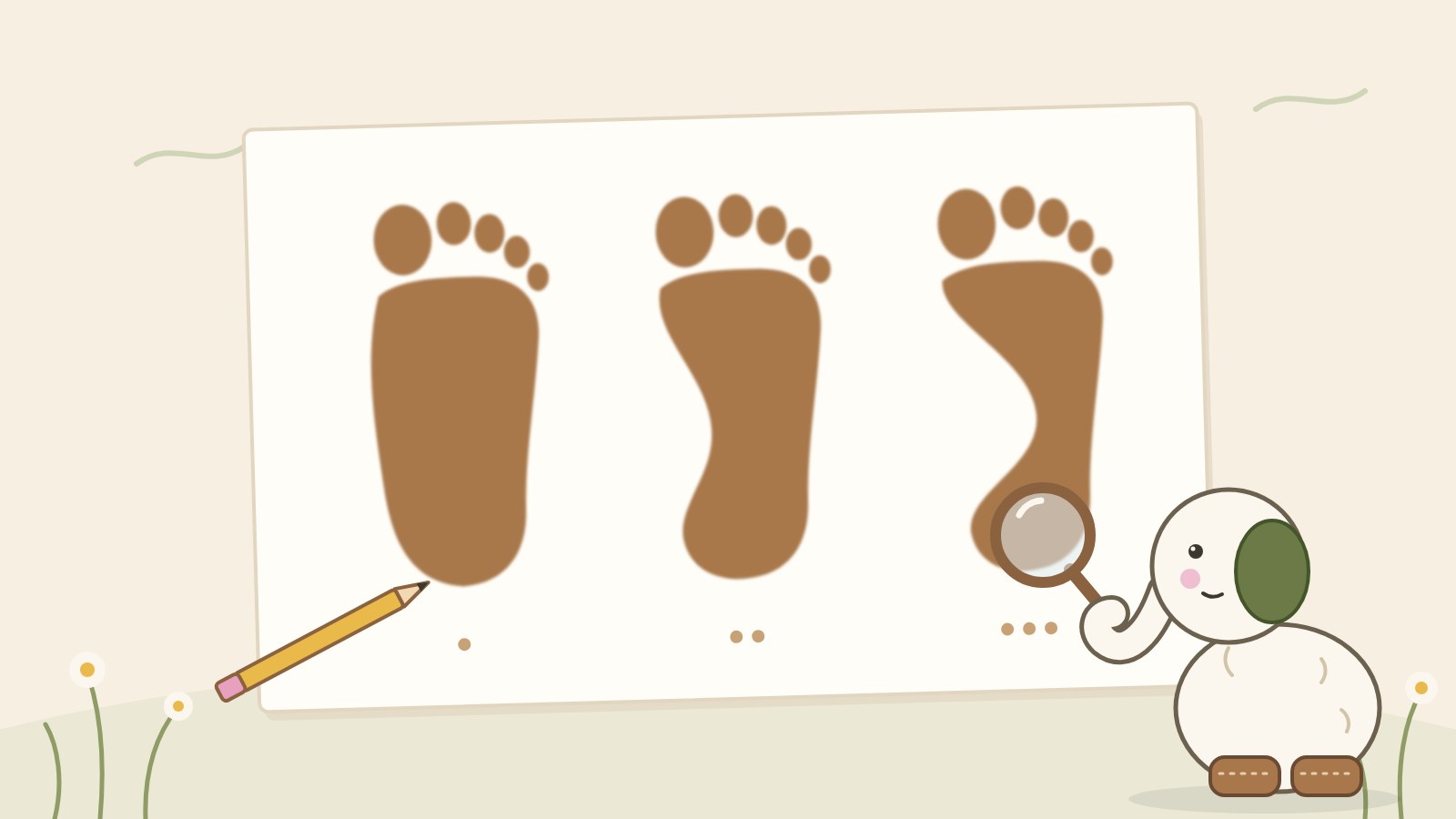
As parents, we often worry when we can't see an arch on our little one's foot, when the foot seems to "roll" inwards, or when their legs look like the letter X. In fact, for most children a "flat" foot is normal for their age, and the arch forms on its own as they grow. These children need neither arch supports nor stiff orthopaedic shoes.
In this article we explain simply what foot shapes are seen in children, when an arch support may be needed, and when barefoot shoes are a good choice.
Foot shapes: normal and not
Most of the shapes seen in children are normal. There are two key questions: is the foot flexible or rigid, and does the child have any pain?
Physiological flat foot — normal
In babies and young children you can't see the arch: there's a soft fat pad where the arch will be, and the ligaments are still very elastic. The arch forms gradually — usually by age 5–6, sometimes by 8–10.
Flexible flat foot — the most common
When the child stands, the foot is flat, but when they stand on tiptoe or lift their big toe, the arch appears. A mild heel valgus, where the foot seems to "roll" inwards, is also often within the normal range here. If there's no pain, treatment usually isn't needed.
Rigid flat foot
The arch doesn't appear even when standing on tiptoe. The cause may be fused bones in the foot (tarsal coalition) or a vertical talus, so in this case a visit to an orthopaedist is essential.
High-arched foot (pes cavus)
The arch is too high. This is rare in children and sometimes has a neurological cause, so the child should see a doctor.
X-shaped and O-shaped legs
Before age two, children's legs are often O-shaped (bow legs), and at 3–4 they're X-shaped (knock knees). Both are normal for their age and usually straighten out on their own by 7–8.
Arch supports: what the science says
An arch support can't "give" a child an arch. Studies of flexible flat foot, including a well-known randomised trial (Wenger, 1989), show that arch supports and orthopaedic shoes don't change how the arch develops.
Here in Georgia, arch supports and "orthopaedic" shoes with a stiff heel counter are often prescribed for flat feet almost automatically. It's a long-standing tradition, but modern research doesn't support prescribing them routinely.
When an arch support may really be needed
An arch support or orthosis may be needed if:
- the child is in pain: they complain of pain in the foot, shin or knee, tire quickly or refuse to walk;
- the foot is rigid: the arch doesn't appear even on tiptoe, and the cause needs to be found;
- the child has a neuromuscular condition: cerebral palsy, marked low muscle tone (for example, with Down syndrome) or muscular dystrophy. Special orthoses (SMO, AFO) are often needed in these cases;
- the joints are very hypermobile, it bothers the child, and support helps — for example, with Ehlers-Danlos syndrome;
- heel valgus is severe, getting worse with age or making walking difficult;
- an accessory navicular bone is causing pain;
- the child has been treated for a congenital problem or has had surgery — for example, a special brace is used when treating a congenital foot deformity (clubfoot).
Even in these cases, the main aim of an arch support is to relieve pain and support the foot, not to "correct" it.
Barefoot shoes: when they're a good choice
For most children, walking barefoot and wearing barefoot shoes is good for them: the foot works harder, the muscles get stronger, and that helps the arch develop naturally. Read more in our article "Healthy foot development in children".
Barefoot shoes are a good choice if your child has:
- flexible flat feet without pain;
- mild heel valgus at age 2–6;
- X- or O-shaped legs within the normal range for their age.
If a doctor has prescribed an arch support or orthosis for your child, barefoot shoes aren't completely ruled out. How long your child should wear the orthosis and how long they should move freely is something to decide together with the doctor.
Tips for parents
- Babies don't need shoes before they start walking — warm socks or soft slippers are enough.
- Once your child starts walking, let them go barefoot often on different surfaces: grass, sand, carpet.
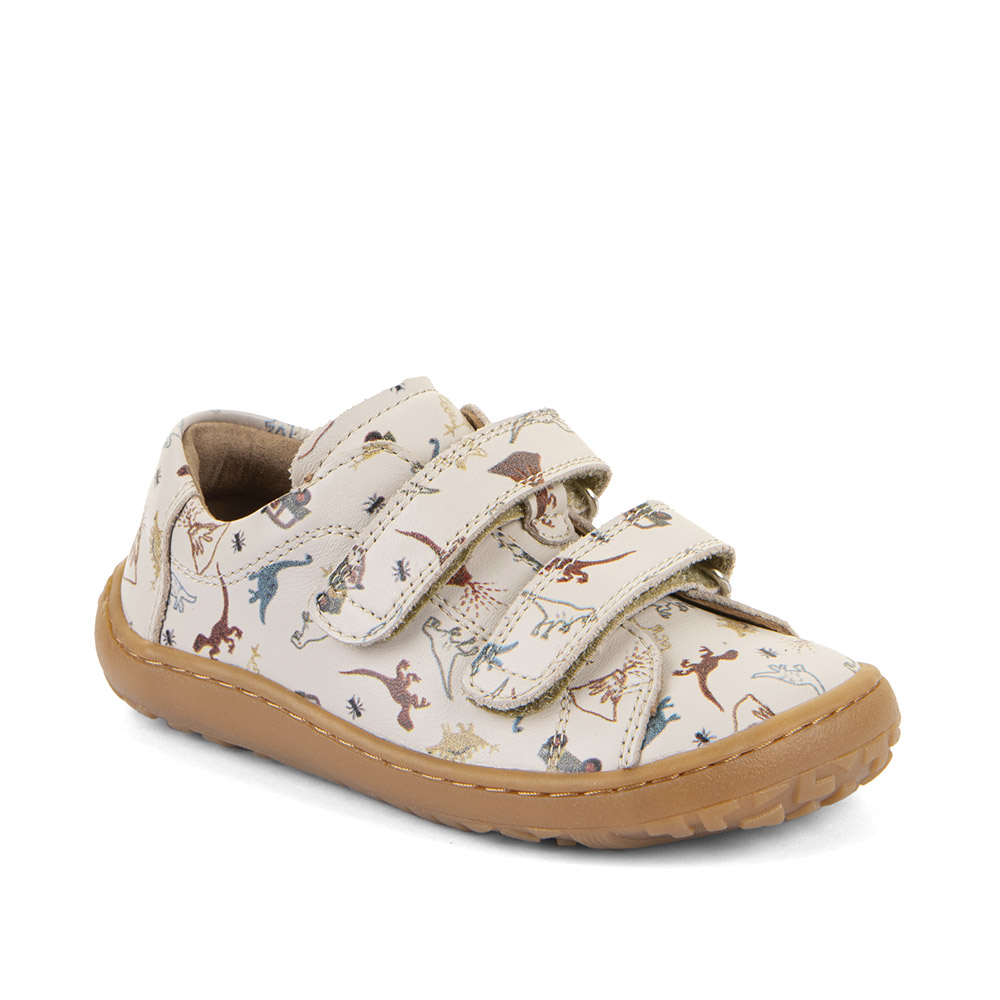
- Shoes should have a wide toe box and be light, with a thin, flexible sole and no height difference between heel and toe.
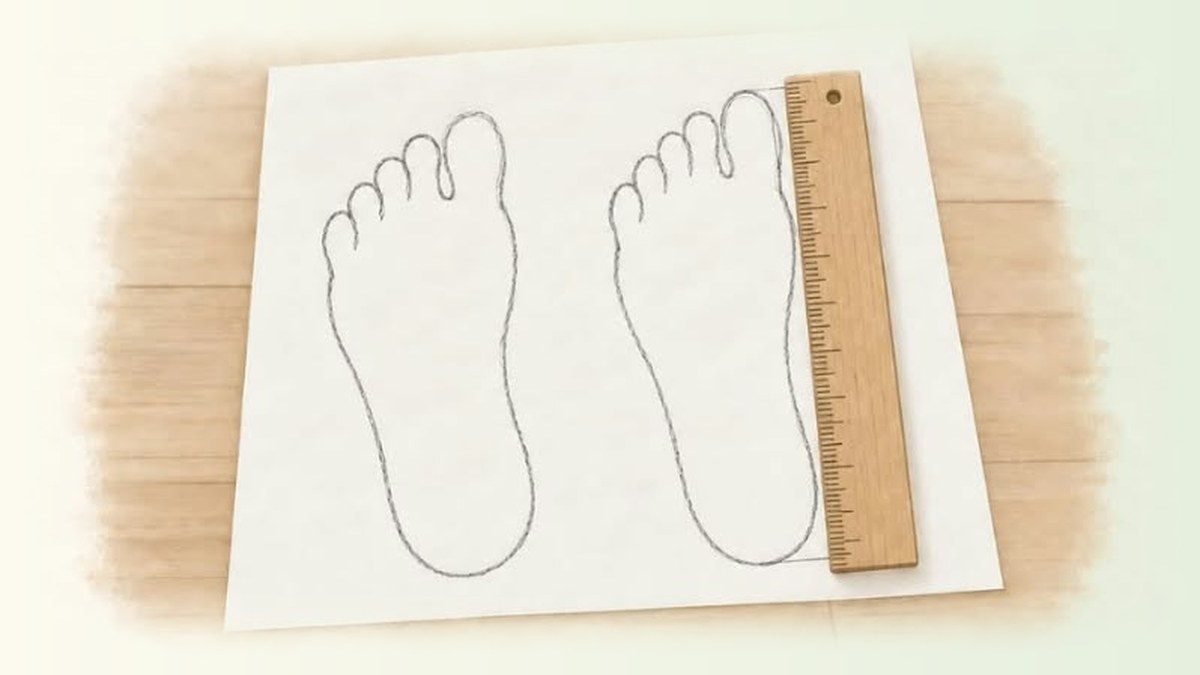
- Check the size every 2–3 months: there should be about 1 cm of space in front of the longest toe. You'll find out how to measure a foot in this article.
When to take your child to the doctor
Take your child to a paediatric orthopaedist if they:
- complain of pain, tire quickly or fall often;
- have a rigid foot, or the shape has changed on one foot only;
- have a foot shape that gets worse with age;
- still walk on tiptoe after age 2–3.
In short
What a child's foot needs most is time, movement and freedom. Flat feet and mild heel valgus are a normal stage of growth in little ones, and arch supports are only needed in specific cases. If anything worries you, have the foot checked by a specialist.
This article is for information only and does not replace a doctor's consultation.
Source
- Wenger D. R. et al. Corrective shoes and inserts as treatment for flexible flatfoot in infants and children. The Journal of Bone and Joint Surgery (Am), 1989. pubmed.ncbi.nlm.nih.gov/2663868