When a little one takes their first steps, many parents ask the same question: what should my child wear so that their feet develop properly? Shops often recommend stiff, high-topped shoes and an arch support "to support the foot". But what helps a child's foot most is something else entirely: walking barefoot.
The arch forms gradually
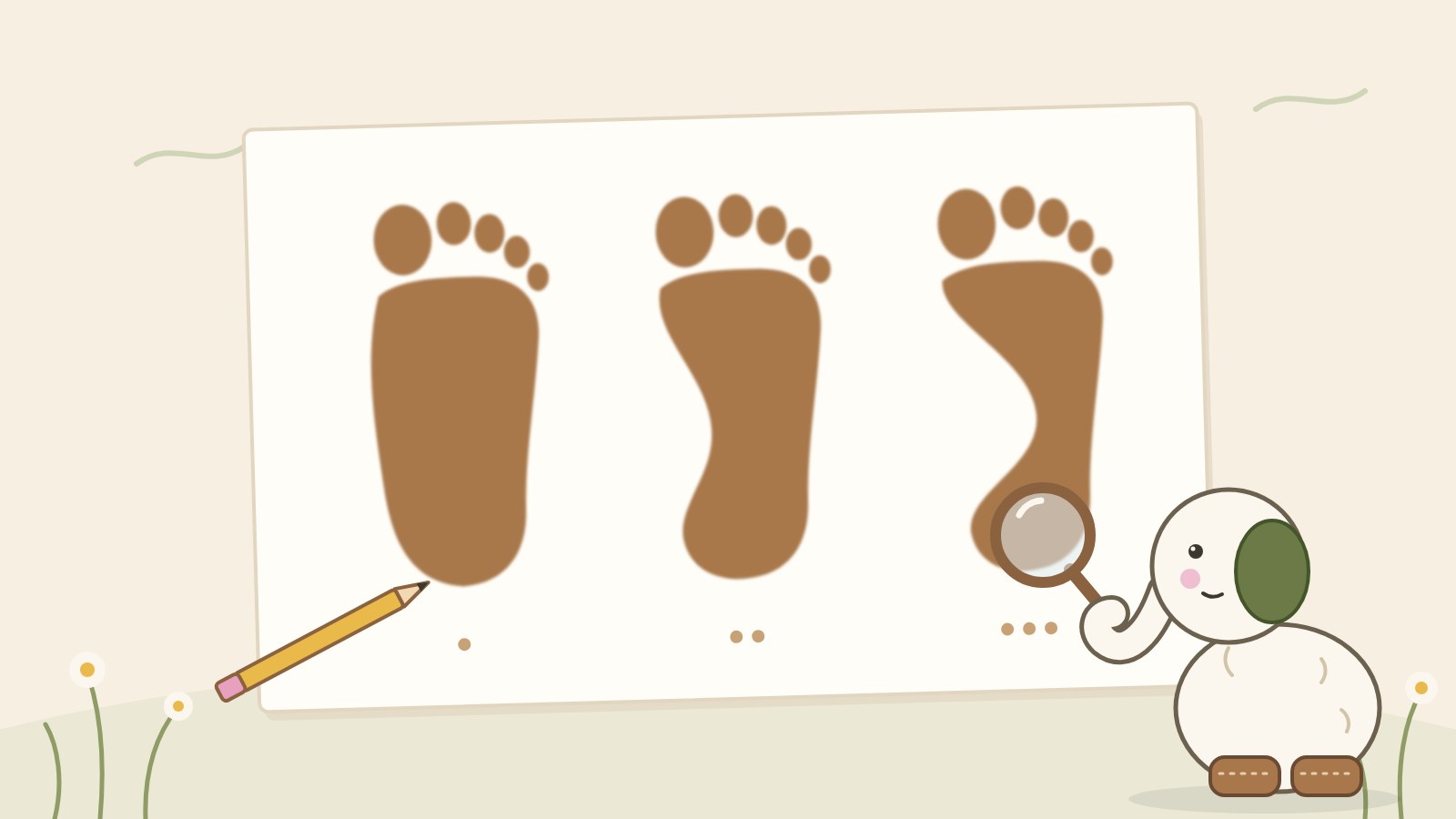
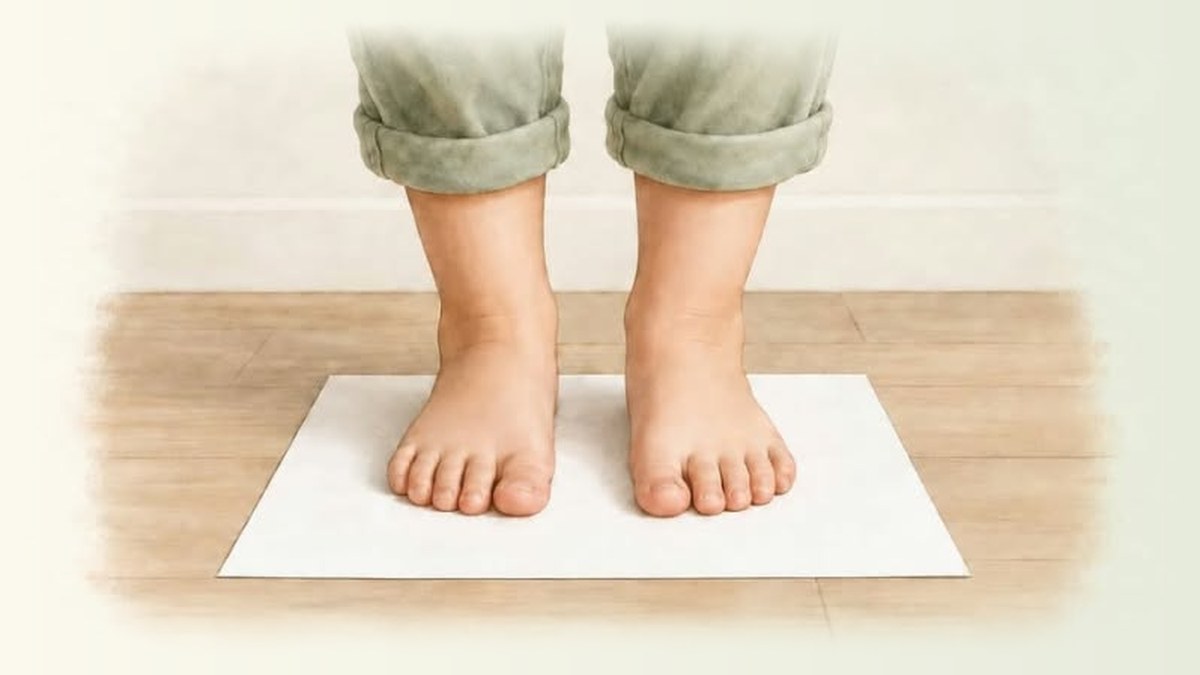
A small child's foot looks flat, and that is completely normal. The arch is not there from birth — it develops over years, as the child grows. When 835 children were measured, 54% of three-year-olds had flat feet, but only 24% of six-year-olds.
The arch is held up not only by bones but by muscles and ligaments too. And foot muscles get stronger the same way as any other muscle — with exercise.
Walking barefoot is the best exercise
When a child walks barefoot — on grass, sand, a rug or in the garden — their foot works with every step: the toes spread and grip the ground, the arch compresses and springs back, and the foot feels what it is standing on. Walking barefoot makes the foot build all the muscles it will need later in life.
Research backs this up:
In India, the feet of 2300 children aged 4 to 13 were examined. Flat feet were found in 8.6% of those who wore closed shoes, but in only 2.8% of those who went barefoot — almost three times fewer.
Measurements of 810 children and adolescents in Germany and South Africa showed that walking barefoot in childhood shapes the arch and the big toe.
Pupils aged 9 to 12 wore minimalist school shoes for two school terms. Afterwards, the small muscles inside their feet had grown, their big toes were stronger and their arches were higher.
What an arch support does, and what it doesn't
An arch support is an insert placed in the shoe that pushes the arch up from below. It gives the foot an artificial arch and so reduces pain — which is why a doctor does sometimes prescribe one. But an arch support neither treats nor develops the foot.
When the arch is held up from outside, the foot muscles have no work left to do. And a muscle that doesn't work doesn't get stronger. So an arch support may even hold back the muscles from developing.
Research confirms this too: 129 children with flexible flat feet wore orthopaedic shoes, heel cups or custom arch supports for three years. Their feet developed exactly the same way as the feet of children who wore nothing at all.
If your child's feet hurt when walking, or a doctor has already confirmed a foot problem, follow the doctor's advice. We are not orthopaedists — we are parents who researched this for our own child and are sharing what we learned with you.
Why barefoot shoes
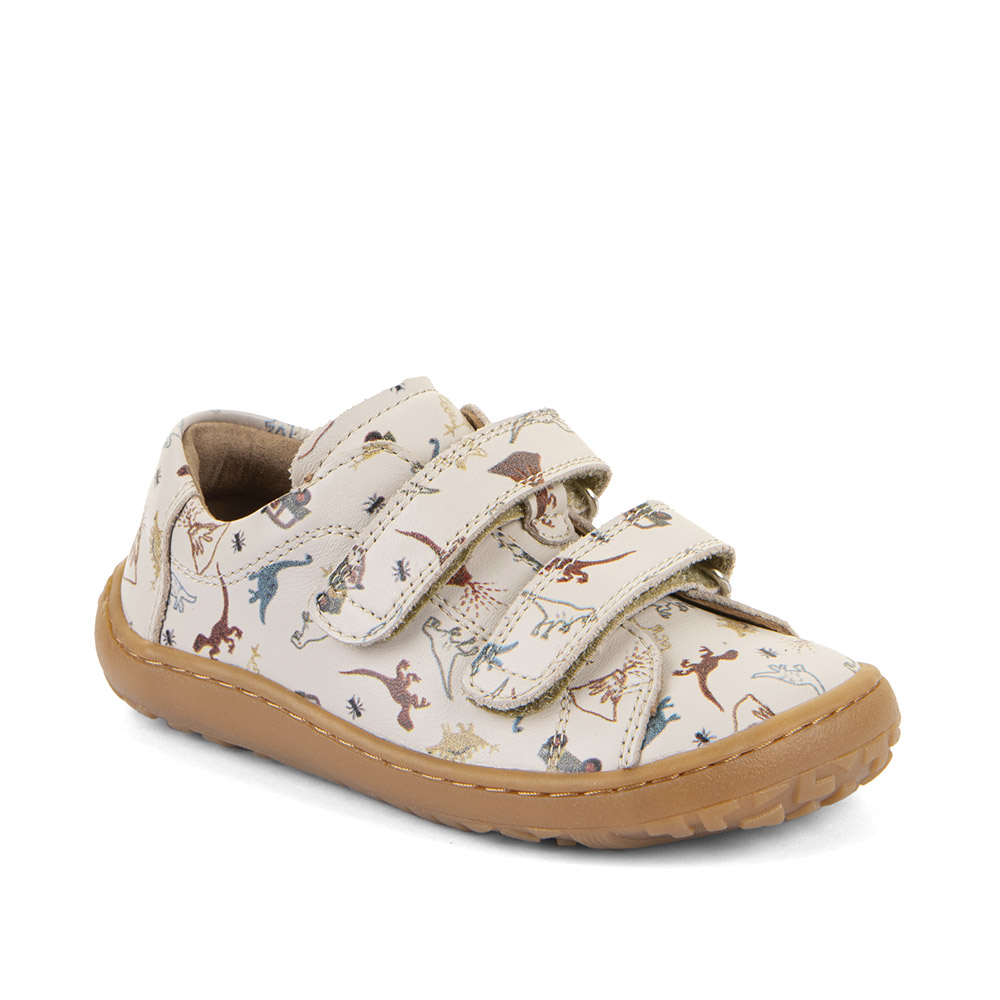
In the city a child can't go barefoot all day: in summer the asphalt is hot, there is broken glass on the pavement, and in winter it's cold. Barefoot shoes were made for exactly this — they protect the foot while recreating the feeling of walking barefoot as closely as possible:
A wide toe box — the toes spread freely, just as they do barefoot.
A thin, flexible sole — the foot feels the ground and works with every step.
No heel — the heel and toes are at the same height, so the body keeps its natural posture.
No arch support — the foot's own muscles hold up the arch.
In shoes like these the foot is protected but doesn't get lazy — it works just as it does barefoot.
A few simple tips
At home, let your child go barefoot.
In summer, walking on grass, sand and earth is a real workout for the feet.
Choose the size by foot length: there should be 10–12 mm of space in front of the longest toe.
Check the size every three months — children's feet grow fast.
A child's foot needs very little to develop well: freedom, movement and time. It will do the rest on its own.
Sources
Pfeiffer M. et al. Prevalence of flat foot in preschool-aged children. Pediatrics, 2006. doi.org/10.1542/peds.2005-2126
Rao U. B., Joseph B. The influence of footwear on the prevalence of flat foot. A survey of 2300 children. The Journal of Bone and Joint Surgery (Br), 1992. doi.org/10.1302/0301-620X.74B4.1624509
Hollander K. et al. Growing-up (habitually) barefoot influences the development of foot and arch morphology in children and adolescents. Scientific Reports, 2017. doi.org/10.1038/s41598-017-07868-4
Fong Yan A., Quinlan S., Cheung R. T. H. Minimalist school shoes improve intrinsic foot muscle size, strength, and arch integrity among primary school students. Journal of Sports Sciences, 2024. doi.org/10.1080/02640414.2024.2386213
Wenger D. R. et al. Corrective shoes and inserts as treatment for flexible flatfoot in infants and children. The Journal of Bone and Joint Surgery (Am), 1989. pubmed.ncbi.nlm.nih.gov/2663868