A child's foot isn't a scaled-down version of an adult's. It's built differently and it grows differently. Here are a few facts that will come in handy when choosing shoes.
1. The foot has 26 bones
Each adult foot has 26 bones, 33 joints and more than a hundred muscles, tendons and ligaments. All of them work together so the foot can carry the body's weight, cushion each step and keep its balance.
2. A newborn's foot is almost all cartilage
At birth, many of the bones in the foot are still soft cartilage. They turn into bone gradually, over years, and the process continues into the teenage years — until about the age of 18. That's why a child's foot changes shape easily — for better or for worse, depending on what they wear.
3. Flat feet are normal in toddlers
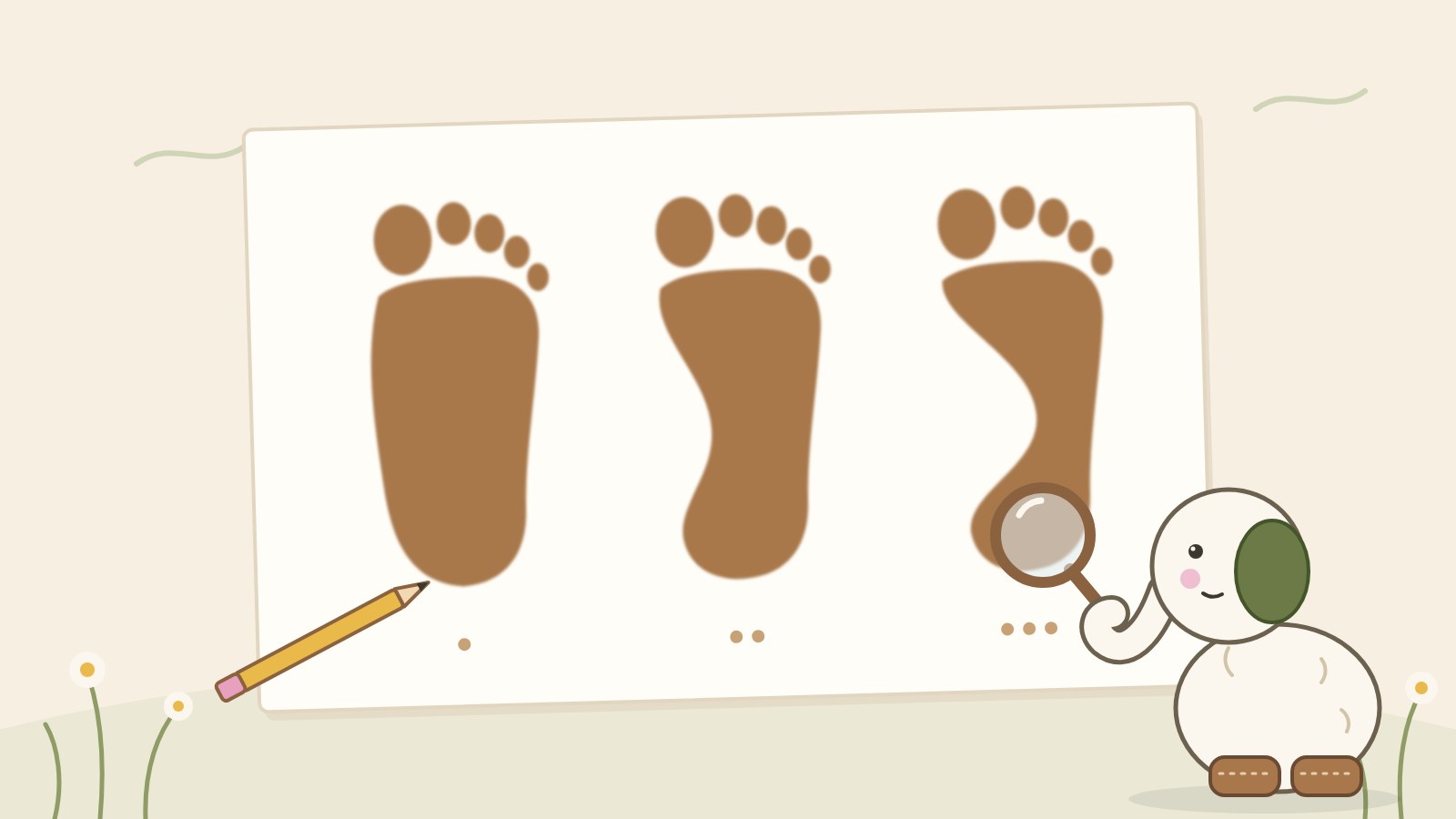
A small child's foot looks flat: there's a soft fat pad where the arch will be, and the arch itself hasn't formed yet. It develops gradually, along with walking and growing. We go into this in more detail in our article "Healthy foot development in children".
4. Children often can't feel that their shoes are too tight
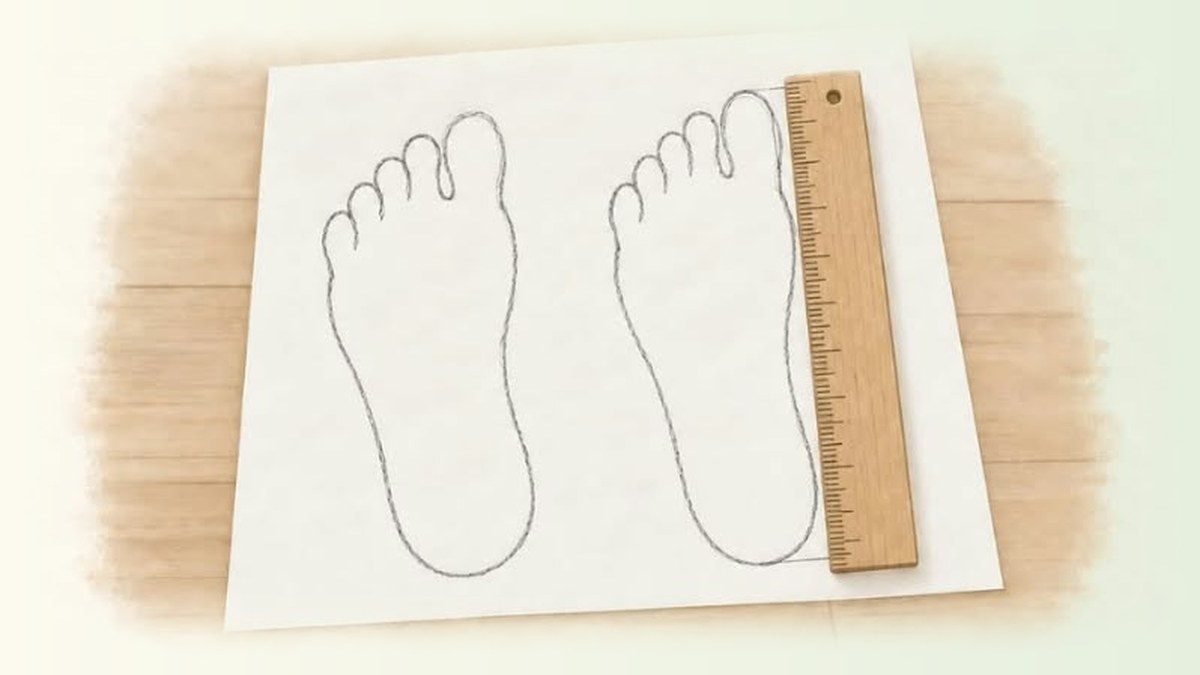
A child's foot is so soft that in short or narrow shoes it simply squashes up — and the child doesn't complain. In one study, 88.8% of preschoolers' indoor shoes were too short. So when choosing a size, don't rely only on what your child tells you — measure their feet regularly. You'll find out how in this article.
5. Feet grow very fast in the first years
In the first few years, a child's foot grows by about one or two sizes a year. Shoes that fitted perfectly in spring may already be too small by autumn.
6. No two feet are the same
Many children have one foot slightly longer than the other. That's completely normal. When choosing a size, measure both feet and fit the shoe to the longer one.
Little feet need very little: room, movement and shoes that don't get in their way.
Source
- Klein C. et al. Increased hallux angle in children and its association with insufficient length of footwear: a community based cross-sectional study. BMC Musculoskeletal Disorders, 2009. doi.org/10.1186/1471-2474-10-159