A child's foot grows so fast that shoes which fitted perfectly in summer may already be too short by autumn. That's why it's worth checking foot length often — and you don't need to go to a shop to do it.
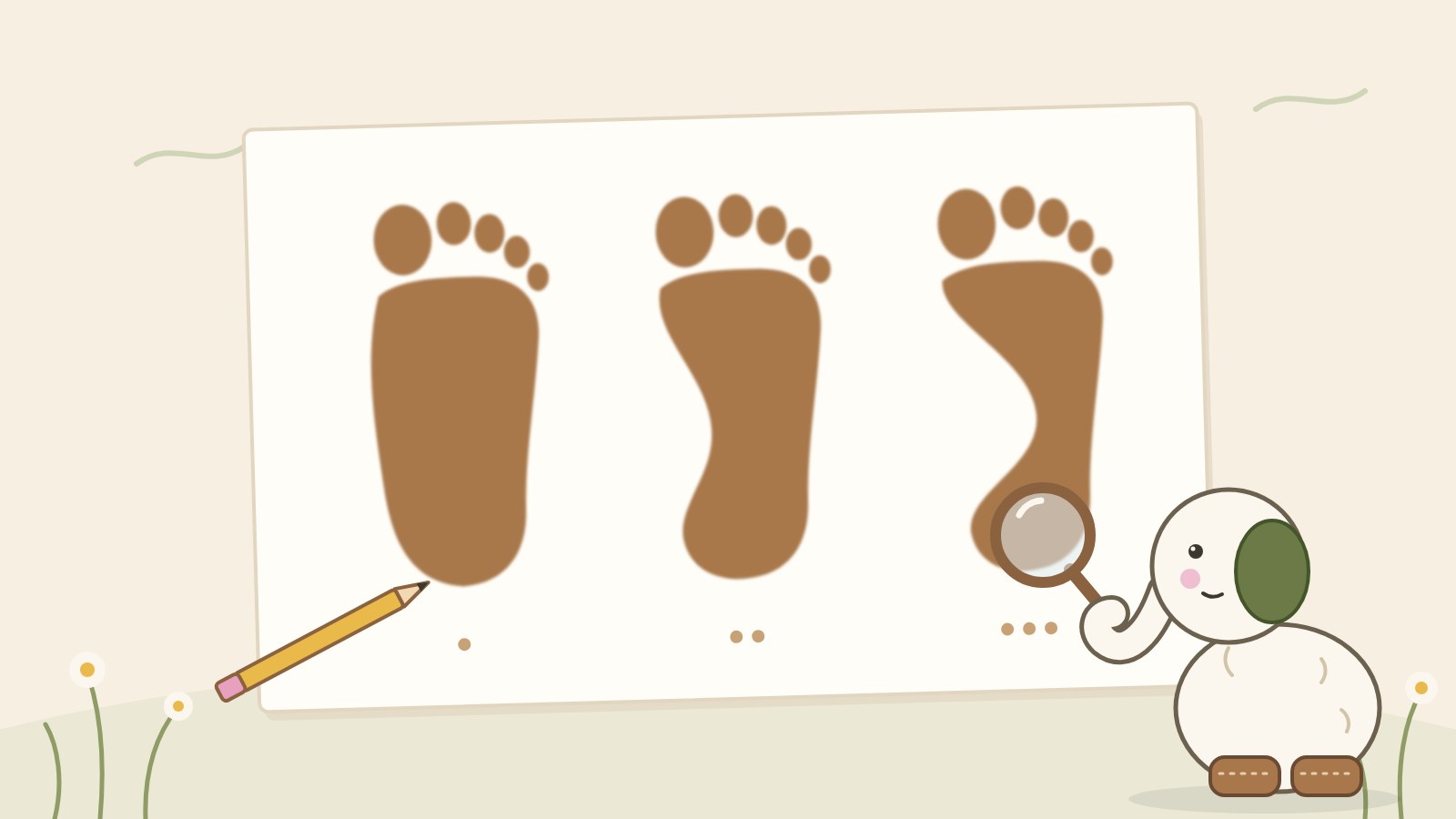
Research shows how much size matters: when the shoes of 858 preschoolers were checked, 88.8% of their indoor shoes turned out to be too short. The shorter the shoe, the more the big toe was bent to the side.
What you'll need
A sheet of paper, a pencil, a ruler and a wall.
Step by step
Measure in the evening — feet get slightly bigger over the day.
Put the paper on the floor, against the wall.
Stand your child barefoot on the paper with their heel against the wall. They should stand, not sit: a foot is longer when standing.
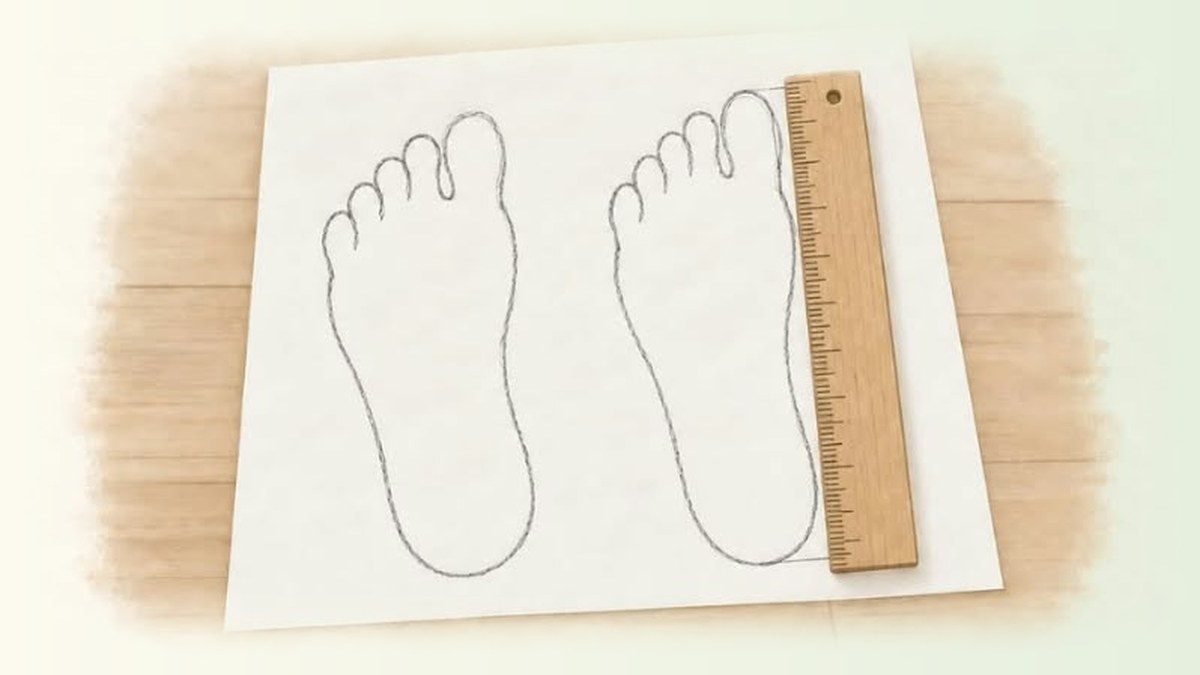
Draw a line at the tip of the longest toe, holding the pencil upright. Bear in mind that the longest toe isn't always the big toe.
Measure the distance from the wall to the line. Measure both feet and go with the larger number.
How to choose the size
This number is the length of the foot, not the shoe size. There should be 10–12 mm of space in front of the longest toe: the foot slides forward when walking, and a child also needs room to grow. For example, if the foot is 125 mm long, the inside length of the shoe should be about 135–137 mm.
On our site you don't have to work this out yourself: every shoe's page has a size calculator. Enter the foot length and it will pick the right size for you. Some models run slightly short, so the calculator works it out separately for each model.
How often to measure
Under three — roughly every two to three months.
From three to six — every three to four months.
After that — every six months.
How to check a shoe
If the insole is removable, take it out and stand your child on it: there should be about a finger's width of space in front of the toes.
Pressing on the toe of the shoe with your thumb isn't accurate — children curl their toes without meaning to.
If your child refuses to put their shoes on or keeps taking them off, the shoes may already be pinching.
Five minutes with paper and a pencil — and you'll know for sure that your child's feet have enough room in their shoes.
Source
Klein C. et al. Increased hallux angle in children and its association with insufficient length of footwear: a community based cross-sectional study. BMC Musculoskeletal Disorders, 2009. doi.org/10.1186/1471-2474-10-159